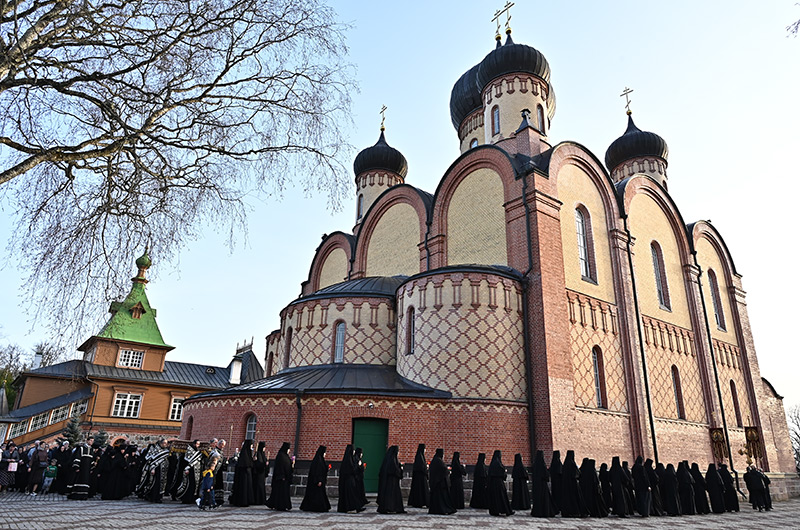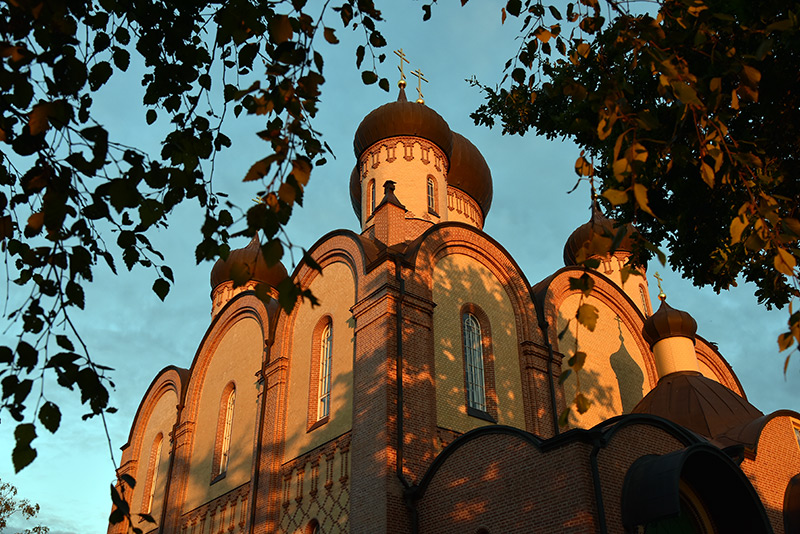
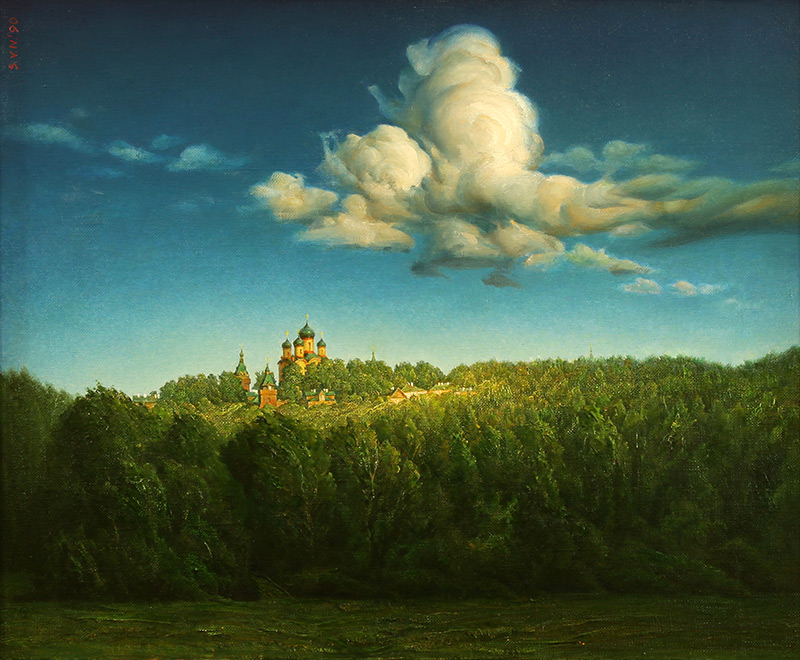
The history of the Pühtitsa Monastery lies within the history of the Pühtitsa region itself. This is exactly where one wants to begin if we want to understand and realize the phenomenon and uniqueness of Pühtitsa. This history goes back into the depths of centuries — to the 12th–13th centuries. It is precisely this historical context that allows us to look at Pühtitsa differently. Its sacredness arose before the appearance of the monastery and even before the emergence of the monastic community. But it was the birth of the monastic community that provided the opportunity for the further multiplication and glorification of God's glory in this place, and also allowed this memory to be preserved and to make it not merely part of local tradition, but an enduring presence in the life of the Russian Orthodox Church as a whole.
The name “Pühtitsa” itself is associated with the Estonian word püha, meaning “holy,” and, in the historical memory of the region, points to the special significance — and perhaps even the divine purpose — of this land, long before the convent came into existence. When speaking of Pühtitsa, we cannot begin with the convent walls alone. We must look deeper, into the history of the land itself, where the sacred was revealed before the walls of the monastery, the monastic cells, and the monastic community came into being. We must see the very soil in which, like a mysterious seed, the future birth of Pühtitsa Convent was already contained.
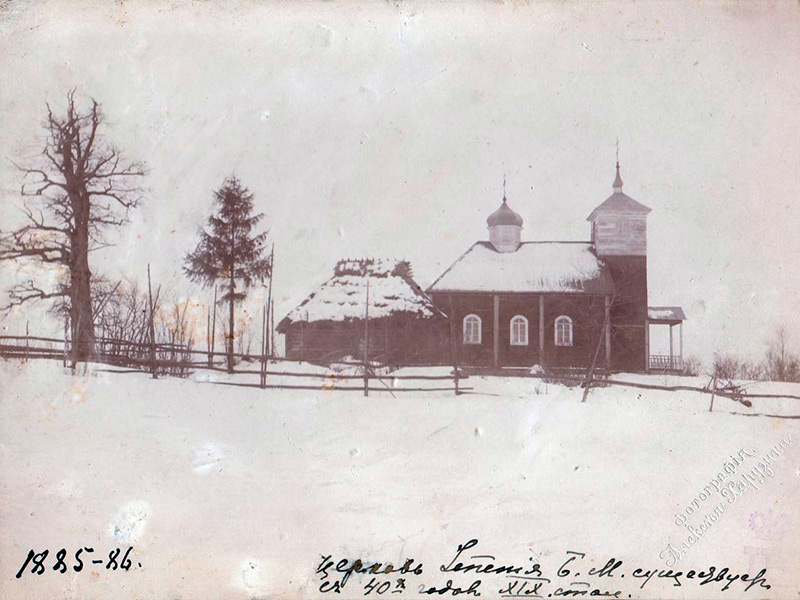
It should be noted that the roots of the Orthodox essence of Pühtitsa's very being reach back even further than the history of the appearance of the Mother of God and the subsequent veneration of Her wonderworking icon, which we shall discuss a little later. Even before the convent was founded, historians noted the considerable influence of Orthodox Christianity in this region. The ethnographer Georgy Trusman (ed. note: 1856/1857–1930), a researcher of Estonian history, the history of Christianity, ethnography, and toponymy, for instance, believed that a significant proportion of the local population was far more familiar with Christianity in its Orthodox form than in its Catholic form.
Later, the sacred character of Pühtitsa acquired a particular significance through the miraculous appearance of the Mother of God and the discovery of Her wonderworking icon of the Dormition among the branches of an oak tree. These events are commemorated to this day by the Holy Spring, which remains in use, and by the ancient oak, beside which stands a chapel that once housed the wonderworking icon. Together, they form a sacred landscape sanctified by the memory of the appearance of the Mother of God, by prayer, pilgrimage, and other expressions of Orthodox piety.
Of particular significance are the numerous accounts of the religious life of the local population: the presence of chapels, the veneration of saints, icons, and springs, as well as the existence of the so-called “semi-believers,” among whom Orthodox beliefs and customs continued to be preserved even after some of the population had converted to Lutheranism. This demonstrates that the Pühtitsa region was an open spiritual space in which different confessional traditions could encounter one another and coexist in their shared orientation towards the sacred.
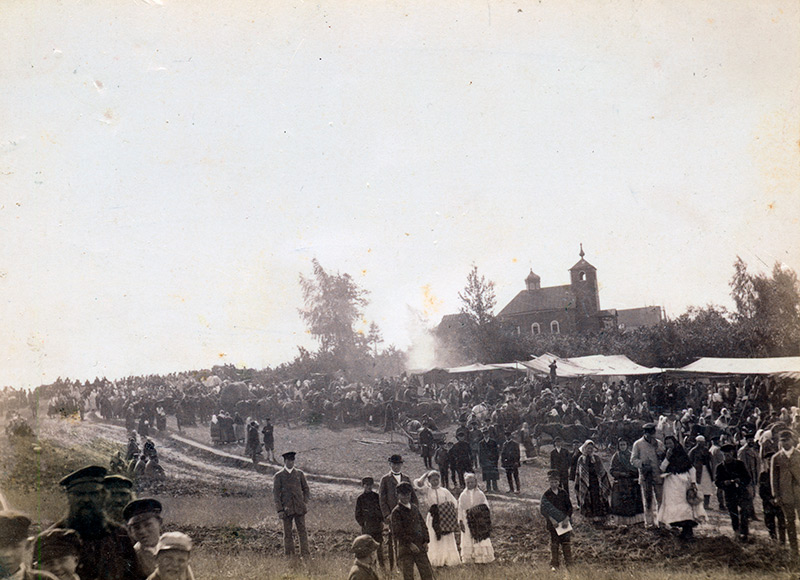
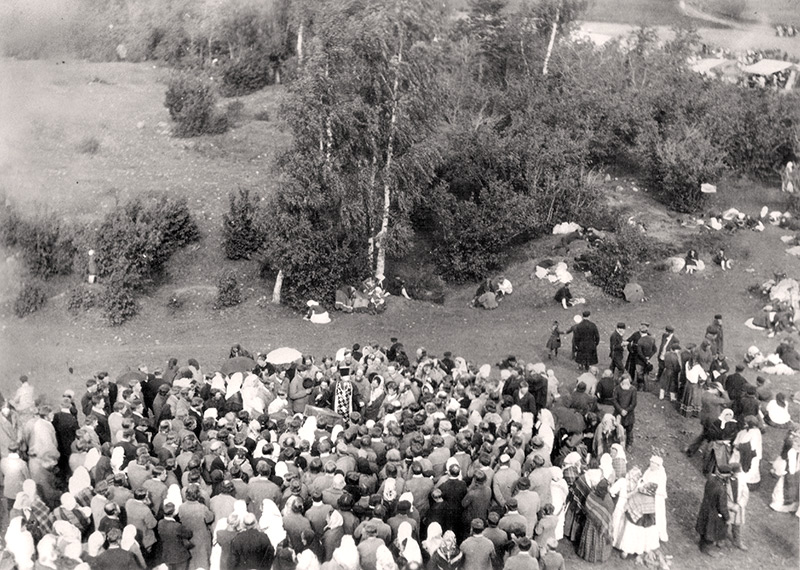
The Orthodox character of this holy site did not mean that the space was closed off from all traditions other than Orthodoxy. On the contrary, the sacred character of Pühtitsa itself possessed a grace-filled power of attraction for the surrounding population, including those from different cultural and confessional backgrounds. This was especially evident during the annual celebration of the Dormition of the Mother of God on Pühtitsa Hill and the religious procession carrying the wonderworking icon of the Dormition of the Mother of God, both of which drew considerable crowds.
In this sense, Pühtitsa was not merely a geographical location, but a distinctive and unique space in which different religious and cultural traditions had intersected over the centuries. Different ways of perceiving the sacred converged here, but this convergence did not imply the existence of several independent sacred sites. On the contrary, Pühtitsa was a space in which different cultural languages described one and the same reality, a reality that was first and foremost spiritual. The Estonian name Kuremäe, meaning “Crane Hill,” the name Pühtitsa, meaning “Holy Place,” and the designation Bogoroditskaya Hill (ed. note: Bogoroditskaya means “of the Mother of God” and denotes a place associated with or dedicated to her in the Orthodox Christian tradition) reflect different ways of perceiving the same territory. These different cultural languages did not create separate sacred sites; rather, they described and interpreted the same space in different ways, while its sacred centre retained its Orthodox essence.
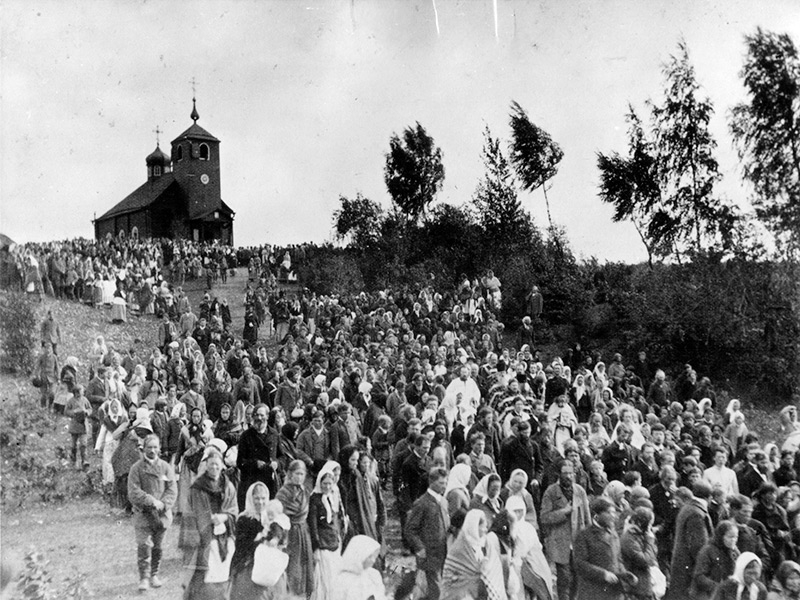
Another distinctive feature of Pühtitsa is that its holiness was associated with the entire surrounding landscape: the hill, the spring, the ancient oak, the place where the icon appeared, the chapel, and the paths along which people made their way here. This was not simply an isolated place of worship, but an integrated sacred space that gradually became part of the life of the Church. From this perspective, the establishment of the convent acquires a particular significance. The emergence of a monastic community becomes a subsequent and organic stage in the life of an already established holy site. With its arrival, a life of unceasing prayer, labour, and service takes root here, while the community itself becomes the custodian of this holy place by God's blessing. In this way, the memory of the sacred revelation that took place here is not merely preserved, but continues to live on, passed down from generation to generation as a living and unceasing Tradition.
Pühtitsa can therefore be understood on two levels simultaneously: as an Orthodox holy site, rooted in its own ecclesiastical history and spiritual tradition, and as a distinctive place of encounter between different cultural and religious traditions. The union of these two dimensions reveals one of the essential characteristics of Pühtitsa Convent: the Orthodox holy site does not dissolve into the diversity of the surrounding traditions, but instead becomes a focal point of the Christian spirit, around which different cultural languages converge as they encounter the innermost spiritual reality of this place.

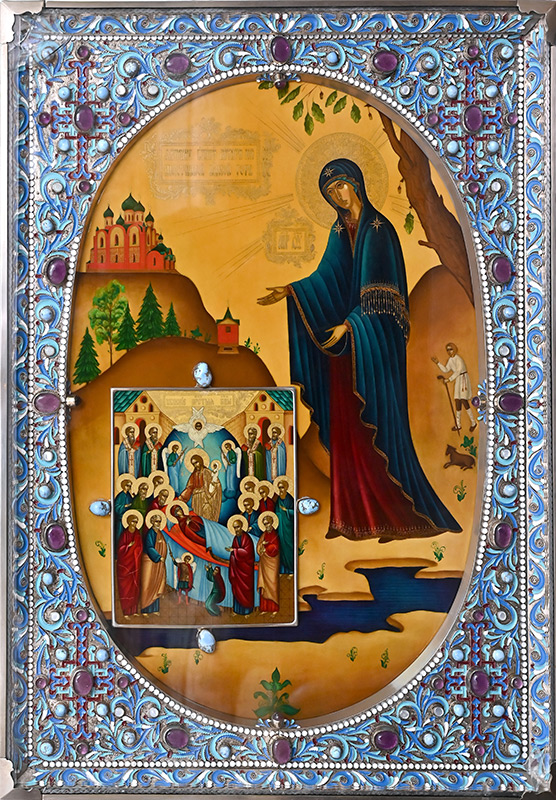
Suddenly, he saw a noble Lady standing on the hill, clothed in radiant, resplendent garments (according to tradition, this took place at the site of the Holy Spring).
“What could this mean?” the Estonian wondered, and set off towards the hill. But as he drew near, the vision vanished, disappearing from sight into an unknown place. The Estonian looked all around, but saw nothing. He then returned to his herd. Then the vision appeared once more on the hill, in exactly the same place. The Estonian herdsman set off again, hoping to see the apparition more clearly. Yet once again, as he approached the hill, it vanished. When he returned to his herd, it appeared anew. Upon returning home, the Estonian told his fellow villagers what he had witnessed.
“I saw,” he said, “a wondrous vision on the hill: a noble Lady clothed in garments radiant with light. Yet I could not approach Her, for whenever I began to draw near, the vision would immediately vanish from sight, disappearing to a place unknown. And whenever I returned to my herd, She would appear again. Come with me, and you will see for yourselves that I speak the truth.

”Some agreed to accompany him, and early the next morning they set out together. When they arrived, they indeed saw, not far from the spring, a certain noble Lady, clothed in garments radiant with light. They began to approach the hill, hoping to behold the vision more clearly, but it vanished from sight. This happened several times.
On the third day, other Estonians from the same village joined them. Yet the same thing happened once again: they all saw the vision from a distance, but whenever they attempted to draw near, it vanished from sight, withdrawing to a place unknown.
Then they climbed the hill and began to search the area carefully. There, at the very spot where the noble Lady had appeared, they found an ancient icon.

Having found the icon, they could not understand whom it depicted, for they were Lutherans, who, as is well known, neither venerate icons nor recognise them as sacred images. Yet they were kind-hearted people, and they decided to give the icon to the Orthodox Christians—the Russian peasants. Just then, some Russians happened to be passing near the hill. They were peasants from the neighbouring village of Yam, on their way to fulfil their labour obligations at a nearby manor. Their route took them past the Estonian village and the hill. The Estonians approached them and said:
“Here, we have found some kind of icon. We do not venerate icons, but you do. So take this icon for yourselves.”
They then recounted in detail everything that had happened and how they had found it.
The Orthodox peasants accepted the icon from the Estonians and immediately recognised it as an icon of the Dormition of the Mother of God.
As can still be seen today, the icon is old and weathered, yet it has survived intact. It was painted in the ancient style, without lavish ornamentation. It measures twelve vershoks in height and ten vershoks in width (ed. note: a vershok is an old russian unit of length used before the metric system became standard; 1 vershok = 4.445 cm).
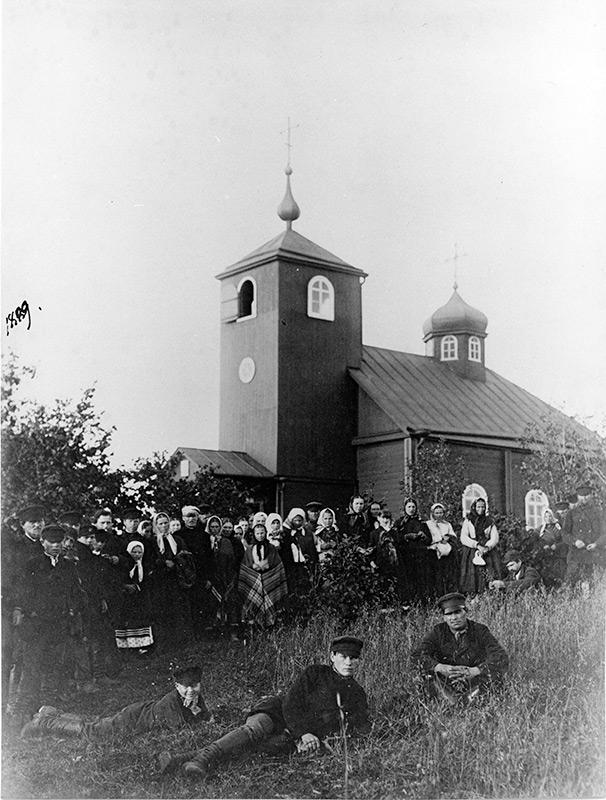
But why had this icon appeared, and who was the wondrous Lady who had manifested Herself at the very place where the icon was found? The Orthodox peasants questioned one another in bewilderment, marvelling at what had happened, yet unable to comprehend its meaning.
And yet, deep in each of their hearts lay a quiet conviction that it had been the Mother of God Herself—the Most Holy Sovereign Lady, the Theotokos and Ever-Virgin Mary. She had appeared on the hill to reveal Her holy icon to the people. The icon had been revealed as a sign of Her mercy towards humankind.
“It seems that She, the merciful Intercessor for the Christian race, has looked down from Heaven and seen our tears and the hardships of our lives in this remote region, where we endure oppression and live in constant fear at the hands of those who do not share our Orthodox faith,” the peasants said to one another. “And so She has sent us Her icon as a sign of Her help.”
“Perhaps the icon has been entrusted to us,” others said, “so that we may not forget our holy Orthodox faith in this land, and so that we may continue to venerate the Mother of God with all due devotion.”
At last, they came to an agreement:
“From this day forward, let us venerate this holy icon of the Mother of God with all diligence. There are no Orthodox churches anywhere in the entire Pomorye region (ed. note: in a historical or religious texts, Pomorye usually evokes the Russian North as a cultural and geographical region, rather than a precisely defined administrative territory). Let us therefore build a small chapel on the hill where the Mother of God appeared, place the revealed icon inside it, and let it serve us in place of a church.”
Having reached this decision, they built a chapel on the hill. Once the chapel had been built, they resolved to celebrate the Feast of the Dormition each year. They began inviting a priest from the cathedral in Narva to serve the Divine Liturgy on the feast day, which falls on 15 August according to the Julian calendar (ed. note: corresponds to 28 August in the Gregorian calendar).
From that time onward, Kuremäe, meaning “Crane Hill,” came to be known as Pühtitsa — the Holy Hill. And the spring at its foot came to be venerated as holy.

In April 1885, Prince Sergei Shakhovskoy took office as Governor of Estonia. His devoted companion and trusted partner in all his endeavours was his wife, Princess Elizaveta Dmitrievna. The scope and diversity of Prince Shakhovskoy’s activities in Estonia were such that no aspect of public life escaped his attention or remained beyond his influence. His interest in religious affairs stemmed not only from his deep Christian faith but also from his vision and foresight as an administrator.
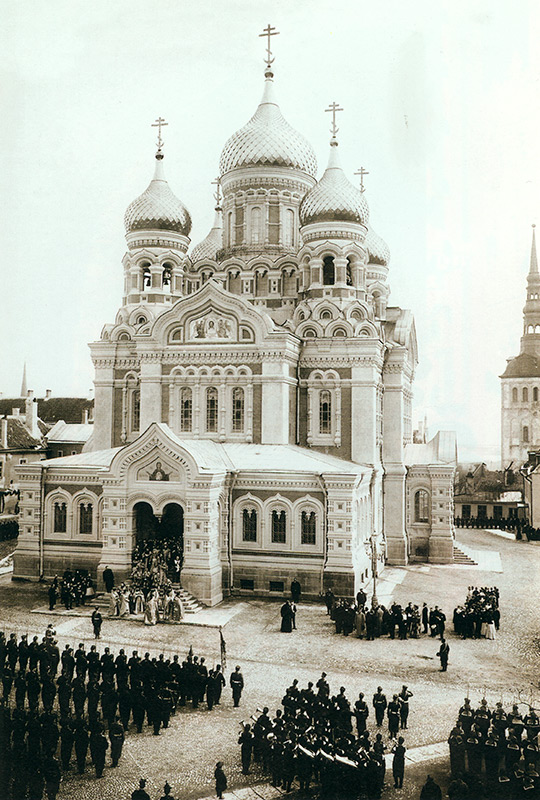
During his tenure as Governor of Estonia, through his personal initiative and direct involvement, Orthodox churches were built in newly established rural parishes throughout the province, as well as St Alexander Nevsky Cathedral and a chapel in Reval and a building for the Transfiguration Orphanage. The founding of the Pühtitsa Convent was another significant milestone in his public service.
The Prince and his wife felt a profound calling to devote themselves to charitable works for the glory of God. They were looking for a place where a monastery could be established, where the monastic life could flourish and unceasing prayer could ascend to Heaven. By Divine Providence, in June 1885, the Prince first first learned of the holy site at Pühtitsa.
In June 1885, shortly after Prince Sergei Shakhovskoy’s appointment as Governor of Estonia, his aide, Mr S., an official assigned to special duties, set out on an official tour of the Wesenberg district.
As he passed an inn on the Mentak estate, Mr S. noticed something unusual in this predominantly Lutheran region: a roadside pillar bearing an Orthodox icon of St Nicholas the Wonderworker. His Estonian driver could offer no explanation for its presence. At the inn, however, Mr S. met its owner, Kolchin, an elderly and respected Russian who had lived there for more than fifty years. Upon entering Kolchin’s home, the official was astonished. The room resembled the dwelling of a wealthy Orthodox merchant, while the entire icon corner was adorned with precious icons in gold revetments, before which vigil lamps burned.
Old Kolchin explained that before the railway was built, the road connecting St Petersburg with Warsaw had been a well-travelled road. The post stations and inns along the route had all been operated by Russians, who had erected roadside pillars bearing icons. Over time, the Russians departed, and Estonian Lutherans took their place, removing the other markers of the Orthodox faith. Only this pillar survived, thanks to Kolchin’s care.
But most importantly, Kolchin told the official about sacred site at Pühtitsa, fifteen versts from the inn. He recounted that, in times beyond living memory, Estonian Lutherans had discovered the wonderworking Icon of the Dormition of the Mother of God, miraculously revealed upon the hill. As it was no longer considered safe to keep the wonderworking icon in a small chapel in such a secluded place, it was first moved to the cathedral in Narva and later to the church in the village of Syrenets, about 30 kilometres away from Pühtitsa. Every year, on 15 August, an Orthodox procession brought the icon to Pühtitsa Hill, to the ancient chapel. Thousands of pilgrims and worshippers gathered there for the feast, among them local Lutherans and the so-called semi-believers — Estonians who observed Orthodox rites. The journey from Syrenets was arduous. In those days, no direct roads connected the village with Pühtitsa, and pilgrims had to follow narrow paths through forests and marshes. According to the Syrenets Chronicle, in some places the marshes were so deep that people had to wade through water up to their knees. The holy icon was passed from one bearer to another, each carrying it reverently, close to their chest. The healing spring at the foot of the hill was held sacred by all, without exception. Kolchin spoke with particular delight of the fact that a priest, Karp Tizik, had finally begun travelling from Reval to serve at the holy site. Celebrating the services in both Russian and Estonian, he drew large congregations.
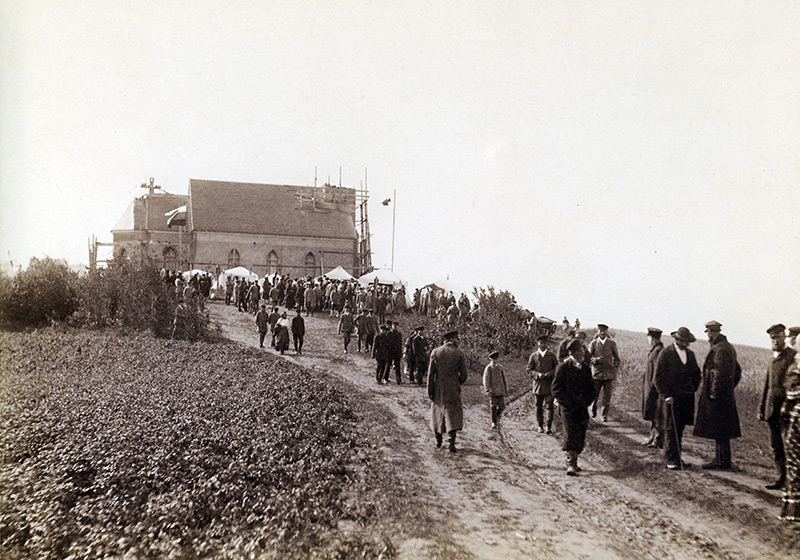
This growing movement towards Orthodoxy alarmed the local German Lutheran barons. In an effort to keep the peasants within the Lutheran fold, they hastily raised 8,000 roubles and began building a Lutheran church of their own on Pühtitsa Hill, a place sacred to the Orthodox.
Wishing to verify Kolchin’s account for himself, Mr S. travelled to the Illuka estate, where the hill was located. A local peasant, Rudolf Andreyev, confirmed Kolchin’s account and added that many local Estonians bore Russian surnames — Solovyov and Zabolotny, for example — even though they no longer remembered the Russian language. After inspecting the dilapidated Orthodox chapel, built in 1876, Mr S. discovered that construction of the Lutheran church was already well under way, with its foundations being laid just a few sazhens from the chapel (ed. note: a sazhen was a traditional russian unit of length equal to approximately 2.13 metres).
Upon returning to Reval, Mr S. personally reported to Governor Prince Shakhovskoy that the sacred site at Pühtitsa existed, that it was held in profound reverence by the local people, and that construction of the Lutheran church was proceeding without the required authorisation. The Prince was deeply struck by this report.
In August of the same year, Mr S. returned to Pühtitsa and found that the walls of the Lutheran church had already been raised to roof level. The Germans intended to consecrate the church on the very eve of the Orthodox Feast of the Dormition, 14 August. On that day, as the festal All-Night Vigil was beginning in the Orthodox chapel, the workers building the Lutheran church—almost all of whom had formerly been Orthodox—laid down their tools and went to pray in the chapel.
This proved to be the turning point. By order of Prince Shakhovskoy, the Governor permanently halted the unauthorised construction, which had begun without the approval of the Ministry of Internal Affairs. The hill remained under the authority of the Orthodox Church, and the walls of the unfinished Lutheran church were later incorporated into a monastery church, thus fulfilling the will of the Prince, a steadfast defender of this holy site. (Source: “A Wreath for His Grave: Articles in Memory of Prince S. V. Shakhovskoy, Former Governor of Estonia,” edited by G. Yanchevetsky, Reval, 1896. Review of S. Nikolaev’s article, “The First Official Accounts of the Pühtitsa Shrine.”)
Thus began the gradual establishment of the Pühtitsa Convent.
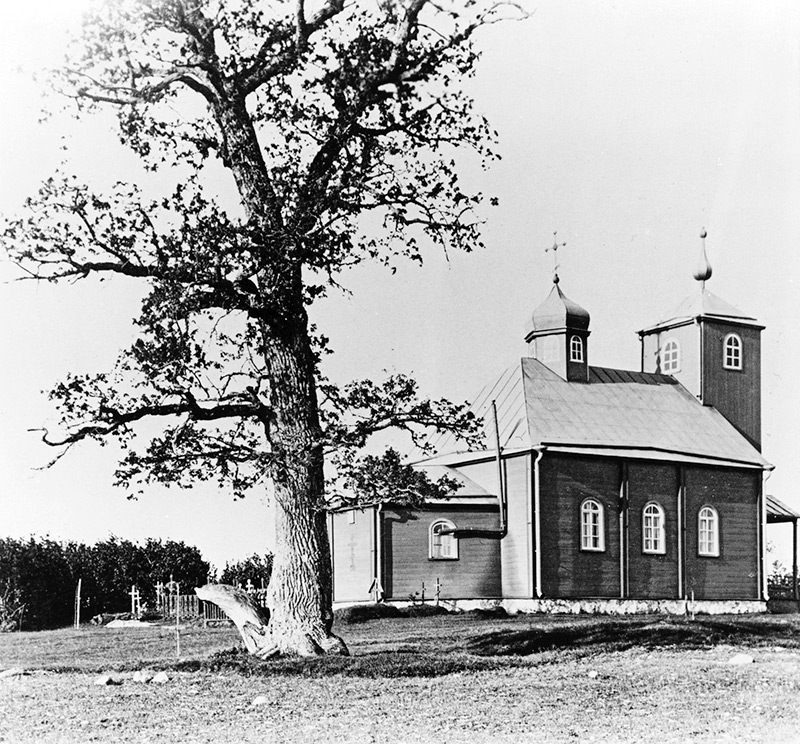
An important milestone in this process was the establishment of an independent Orthodox parish in Pühtitsa. On 7 November 1885, the Holy Synod issued a decree No. 3894, converting the chapel into the Church of the Dormition of the Mother of God and establishing a separate parish to serve it. Father Ioann Ioganson was appointed as its first full-time priest.
However, the establishment of the parish was only the beginning. Gradually, the idea emerged of establishing a women’s monastery at the site, where nuns would reside permanently to safeguard the wonderworking icon and maintain a life of prayer at the very place of its apparition.

To carry out charitable and educational work on a lawful basis, a local branch of the Baltic Orthodox Brotherhood of Christ the Saviour and the Protection of the Mother of God was established in 1887, at the initiative of Prince Sergei Shakhovskoy. Under the chairmanship of Princess Elizabeth Dmitrievna Shakhovskaya, charitable institutions were opened in Ievve (ed. note: now the town of Jõhvi): a school and a medical facility with a pharmacy and an infirmary for patients requiring outpatient care. The school welcomed children of all religious backgrounds. The Brotherhood’s educational mission extended beyond the education of girls: in 1887, it was decided to open a school for boys as well. The number of children seeking an education soon exceeded the capacity of the existing premises, making a separate school building necessary. Emperor Alexander III, upon learning of the school’s opening in Ievve, ordered 30,000 roubles to be allocated for the establishment of a special food fund.
At that time, however, the Brotherhood regarded its principal aim as the establishment of a women’s convent on Bogoroditskaya Hill at Pühtitsa, to which the charitable institutions opened in Ievve might eventually be transferred.
Princess Elizabeth Dmitrievna Shakhovskaya personally made appeals and wrote letters concerning the advancement of Orthodoxy in Estonia. In particular, in 1888 she corresponded with Saint John of Kronstadt, who sent her his blessing and 200 roubles in support of her charitable and educational work. On 26 September 1888, Father John wrote to Elizabeth Dmitrievna:
“Your Serene Highness, Most Esteemed Princess Elizabeth,
I have received your letter and read it with heartfelt sympathy. May the Lord reward you for all that you are able to do to strengthen Orthodoxy in the land where He has ordained that you should live and labour for the good of the people and the glory of God. You ask God for a miracle to ensure the successful spread of Orthodoxy and to provide assistance to the poor Estonians and Latvians. God is the God of miracles in every age… He has worked miracles and will continue to work them through your Brotherhood, and He will bring your work to completion.
I have the honour of sending 200 roubles for the needs of the society.
I bow to you with heartfelt respect.
Your humble servant and intercessor in prayer,
Archpriest John Sergiev.”
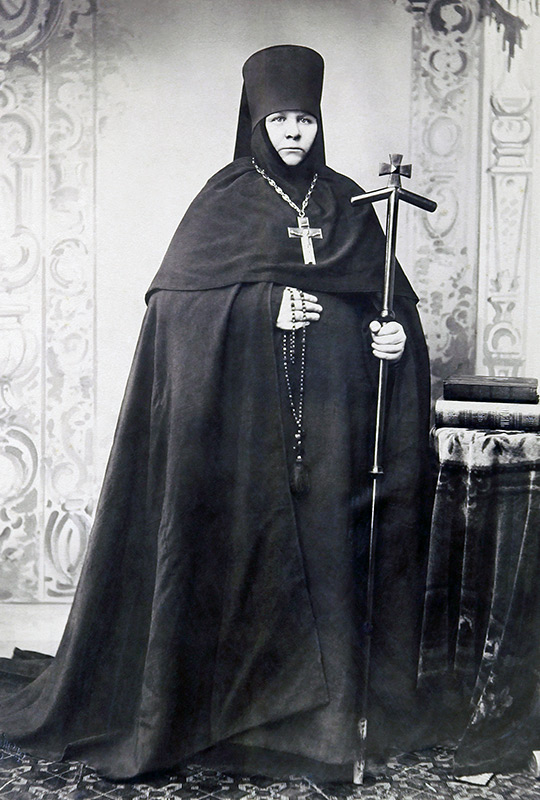
Abbess Maria (Davydova), whom Princess Elizabeth Shakhovskaya described as “a kind guide in Orthodoxy and a faithful friend,” was the abbess of the Epiphany–Anastasia Convent in Kostroma. She became one of the founders of the Ievve branch of the Brotherhood. Mother Maria offered “invaluable guidance on the direction of charitable work in the Governorate of Estonia.” As early as 1886, Abbess Maria drew up a plan for the establishment of “a charitable and educational community, to be developed in time into a monastic institution with charitable establishments.” In 1888, Princess Elizabeth also sought Mother Maria’s assistance in arranging for an experienced sister of mercy be sent to Estonia. Thus, the devoted nun Varvara (Blokhina), whose life was dedicated to the Lord and to loving service to her neighbour, was sent to the Governorate of Estonia, accompanied by several other sisters. She would later become the first abbess of the Pühtitsa Convent and one of its principal founders.
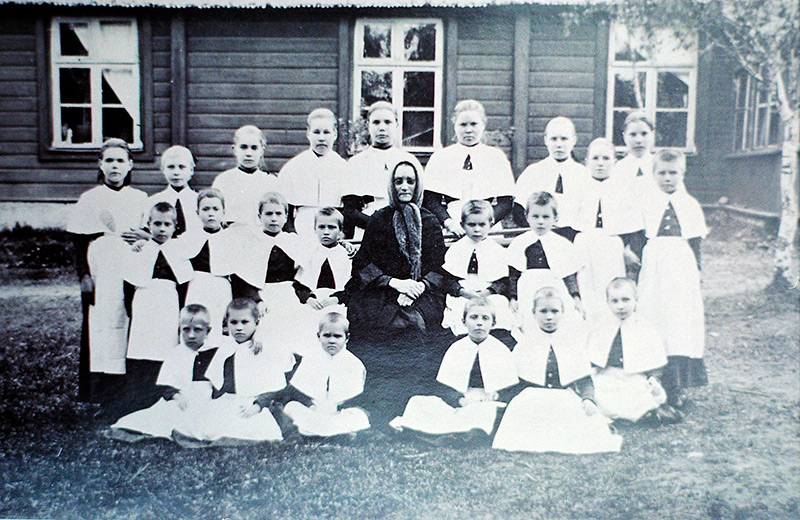
In 1889, the Ievve Brotherhood established an orphanage for Orthodox girls and a needlework workshop for female pupils who attended classes regardless of their religious affiliation. It was in this workshop that Abbess Varvara taught the girls needlework. She also organised a children’s church choir and laid the foundations of a life of prayer in Ievve’s charitable institutions.
In 1890, an Orthodox parish was established in Ievve. Yet all these endeavours were but preparations for the establishment of a women’s monastic community on Pühtitsa Hill.

In 1890, he personally blessed Abbess Varvara for her service as an abbess and for the founding of the community. He took an active and sustained part in supporting the establishment of the future Pühtitsa Convent. Even before the official opening of the women’s community, he personally visited Bogoroditskaya Hill, blessing and consecrating the site intended for the monastery and its future buildings. He also consecrated the first monastery house, built with funds he himself had sent to support the establishment of the convent. The first monastic cells, the cathedral, and the monastery walls were built with his personal donations. For the initial development of the convent, he sent Princess Shakhovskaya his personal blessing and a substantial sum of money.
During one of his visits, Father John stayed in Pühtitsa for four days, from 13 to 16 August. Enormous donations from all over Russia passed through Father John’s hands. He directed funds to Pühtitsa and, importantly, sent future sisters there as well, encouraging and blessing them with these words:
“Go to Pühtitsa; there are but three steps to the Kingdom of Heaven. Kiss this land, for it has been sanctified by the coming of the Mother of God.”
The monastery chronicle has preserved the words spoken by John of Kronstadt to the sisters, and from generation to generation they have reverently treasured this prophecy:
“There are many glorious churches and monasteries throughout the Russian land. Many of them will be swept away to their very foundations by the godless, but this convent is destined to endure for a long time and to grow ever more splendid. And it shall stand until the end of the age.”
These words proved remarkably accurate.
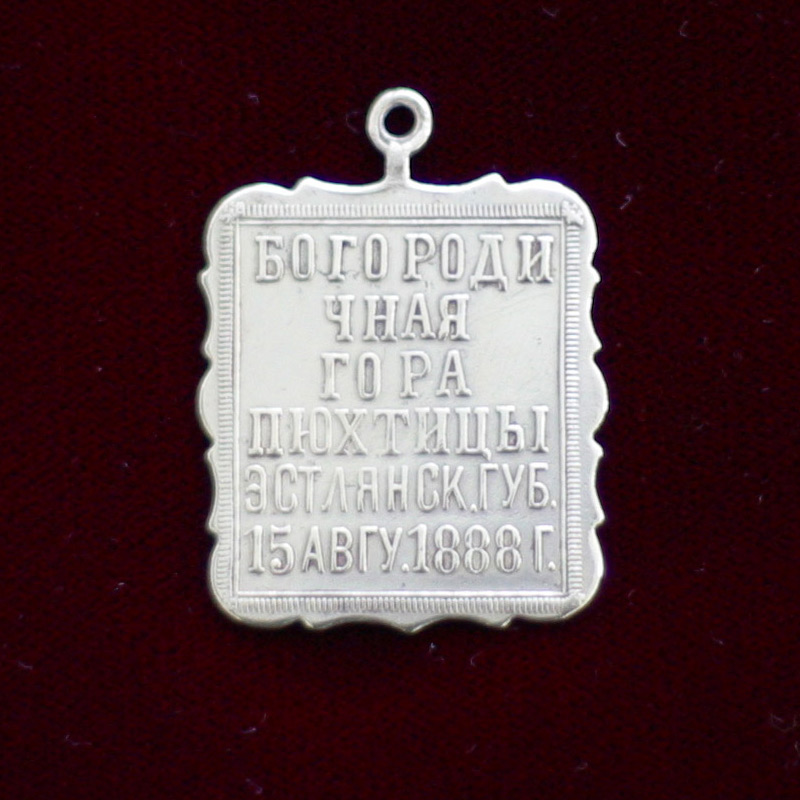
In 1891, through the efforts of Prince and Princess Shakhovskoy, the entire Bogoroditskaya Hill became the property of the Department of Orthodox Confession. This made it possible to realise the long-held intention of establishing a monastic community, transferring all the charitable institutions to Bogoroditskaya Hill and providing everything necessary for the sisters’ life. The Holy Synod granted permission to establish the Pühtitsa Dormition Women’s Community on Bogoroditskaya Hill. In 1892, the community was elevated to the status of the Pühtitsa Dormition Convent, and Nun Varvara (Blokhina) was elevated to the rank of abbess.
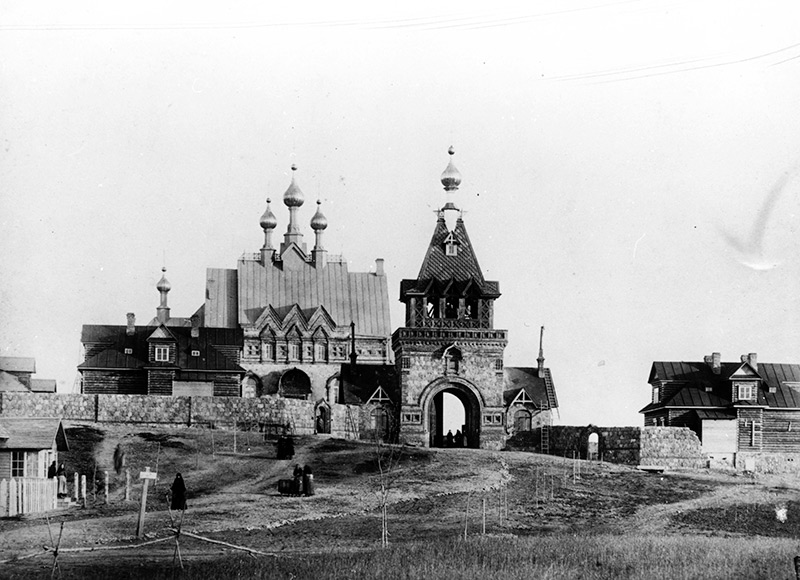
From the very beginning, the construction of Pühtitsa Convent followed a coherent overall design. In 1892, Academician Mikhail Timofeyevich Preobrazhensky proposed a master plan for the monastery complex, with the church at its centre, surrounded by wooden monastic buildings and the Holy Gate with its bell tower. The architectural and construction work was overseen by Alexander Artemyevich Poleshchuk, a native of the island of Saaremaa.
That same year, construction began on the first wooden buildings to house the sisters and an orphanage. The main Holy Gate, built of granite and brick and topped with a wooden bell tower, was also erected. Three bells were acquired for the new monastery.
On 16 August 1892, Archbishop Arseny of Riga and Mitau consecrated the first stone cathedral of the convent, dedicated to the Dormition of the Mother of God. In 1895, a refectory building with a church dedicated to Saints Simeon the God-Receiver and Anna the Prophetess was completed. Thus, the monastic complex gradually took shape, with the church becoming the spiritual centre of the sisters’ common life.

In 1894, the Convent suffered a profound loss when Prince Sergei Vladimirovich Shakhovskoy died suddenly at the age of forty-two. In memory of her husband, Princess Elizaveta Dmitrievna established a church dedicated to St Sergius of Radonezh beside the Shakhovskys’ residence on the hill. The church also housed the family burial vault. The Princess herself was laid to rest there in 1939.
As we have already mentioned, everything here centres on preserving, venerating, and glorifying the holy shrine that the Lord and the Mother of God have deigned to reveal in this place. The life of the convent, as well as that of every person who comes here seeking the intercession of the Mother of God, is rooted in service to God and to one’s neighbour — or, more precisely, in serving God through serving one’s neighbour. This service is understood as a gift entrusted to us by the Mother of God Herself. We firmly believe that She chose this place and revealed Her special, grace-filled presence here, as witnessed by the many miracles and apparitions associated with it.
As one progresses along the monastic path, one comes to realise ever more deeply that it is not we who choose where we are called to serve, but the Lord who leads us to the place where we are to fulfil our monastic vocation. In this light, the words of the Saviour take on a deeper meaning:
“You did not choose Me, but I chose you and appointed you that you should go and bear fruit” (John 15:16).
From its earliest days, the Convent was shaped by a spirit of service to others, expressed in part through the establishment of charitable institutions. The first nuns led lives of extraordinary dedication, and their daily work was itself a form of ascetic labour. According to surviving accounts, the early sisters of Pühtitsa often carried stones and timber themselves to build their living quarters and cells. They cultivated up to 220 hectares of land. At the same time, they cared for patients in the infirmary and taught orphans at the monastery orphanage to read, write and to practise needlework.
Seeing the sisters labour alongside the construction workers, Mother Varvara encouraged them and shared all their hardships. She took turns with each sister in carrying stones, sand, and other building materials. At night, the Mother Superior slept alongside the sisters in the bell tower of the old Dormition Church, now known as St Nicholas-Arseny Church.
From the very beginning, the nuns of Pühtitsa devoted themselves to a life of prayer, hard work, and complete selflessness. earning their livelihood through the work of their own hands. The history of the Convent bears witness to the many hardships and tireless efforts of its nuns over the years. Work was an essential part of daily life at Pühtitsa, but it was more than a practical necessity: it was a way of serving others and deepening one’s spiritual life. The ever-memorable Mother Varvara (Trofimova), the seventh abbess of the Convent, lived by the following spiritual rule and taught the sisters to do likewise: “Prayer and work. Work and prayer”. This is the way of life of Pühtitsa Convent — a path on which prayer sanctifies work, and work becomes an extention of prayer.
Over the 135 years of the Convent’s history, the world has changed more than once, bringing new circumstances and new needs that have called for different forms of service. Its history can be divided into distinct periods, but these are best understood as successive stages in the growth and development of a single, living and complex community: the monastery.
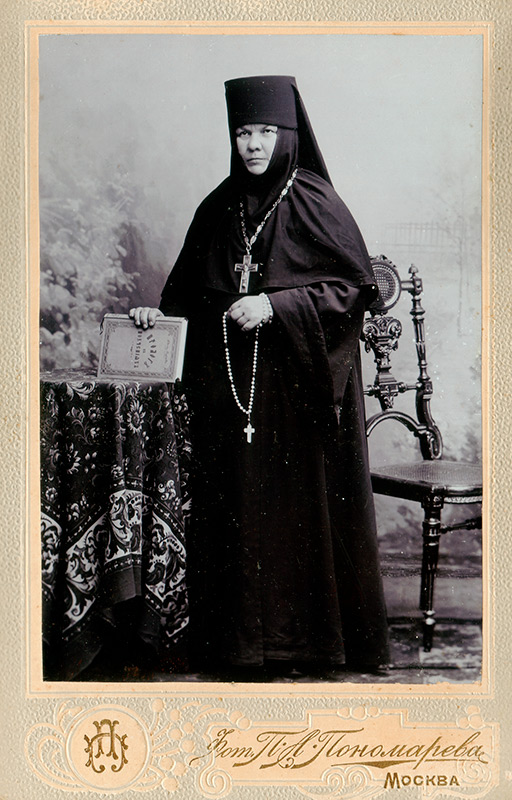
In 1897, Abbess Varvara (Blokhina) was transferred to the Kazan Diocese, and nun Alexia (Plyashkevich), a sister of Moscow’s Strastnoy Convent, was appointed abbess of Pühtitsa Convent. One of her foremost priorities was the construction of a new, larger cathedral with three altars. It was intended to accommodate the convent’s sisters and its many pilgrims, to enhance the beauty of the monastery complex, and to provide a worthy home for the wonderworking icon of the Dormition of the Mother of God.

To raise funds for the construction of the cathedral, Abbess Alexia sent nuns to Riga, St Petersburg, and Moscow. In 1905, during one of these journeys, the novice Anna Abramova met Major General Ivan Filippovich Tereshchenko, who was based in Moscow. After hearing her story of Pühtitsa and seeing a photograph of the convent, he expressed his willingness to donate towards the construction of its main cathedral. According to the monastery’s chronicle, his donation amounted to 90,000 roubles. In return, he asked that he and his family be commemorated daily during the Proskomidia (ed. note: the preparation of the Eucharistic Gifts before the Divine Liturgy.

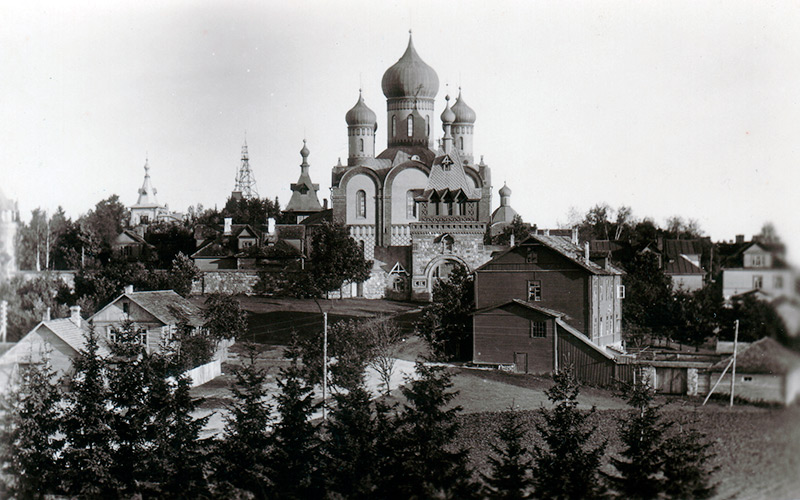
The design for the five-domed Cathedral of the Dormition was created by the St Petersburg architect Alexander Poleshchuk. In the spring of 1908, the old church was dismantled, and its stone was reused in the foundations of the new cathedral. The cornerstone was laid on 15 June of the same year. Two years later, in 1910, the five-domed cathedral rose above the convent, marking it as the architectural centre of the monastery complex and the the place where Pühtitsa’s main shrine was housed.
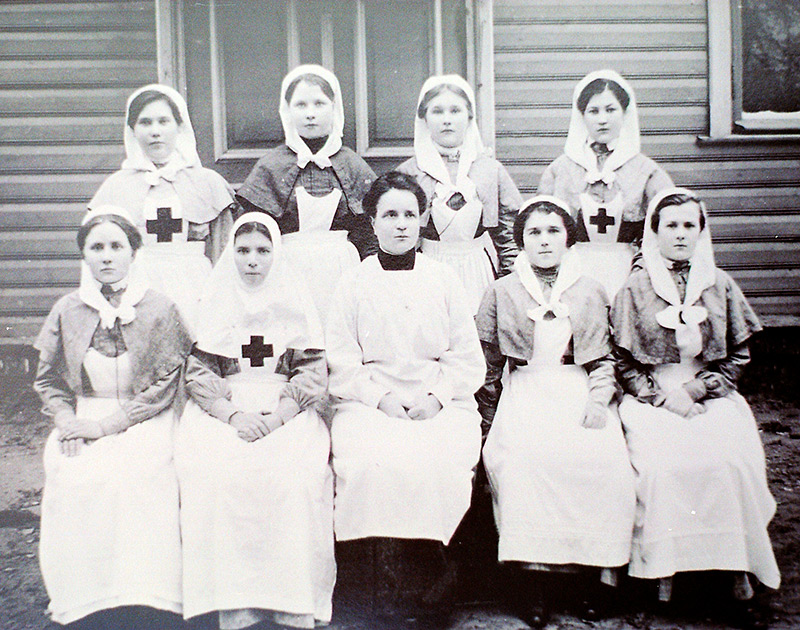
Then came the First World War. The Convent opened its doors to wounded soldiers, and when an epidemic broke out, the sisters tended to the sick. Despite their own poverty, they sewed essential items for the soldiers and sent them to the front, along with food supplies. Children whose fathers had been killed in the war were also taken into the monastery’s orphanage to be cared for and brought up.
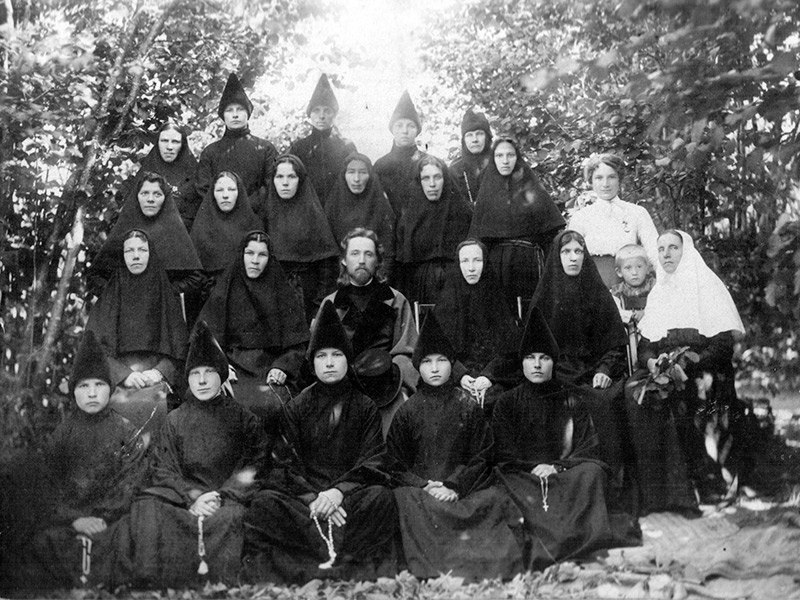
The Revolution brought a new era — one in which the very fabric of life was changing, the familiar world was crumbling, and the Convent faced trials unlike any it had known before. During this time, the Convent lost its abbess Alexia (Plyashkevich), it's second Mother Superior, who was forced to evacuate by order of the Holy Synod along with thirty-two sisters and the wonderworking icon of Dormition of the Mother of God. The Convent also lost its spiritual father, the priest Christopher Vink. Yet, by God’s blessing and through the wisdom and understanding He granted, Pühtitsa endured. Despite the constant threat of closure — a fate that befell many Orthodox monasteries and convents across the former Russian Empire during those years — Pühtitsa remained steadfast in its faith, humbly accepting all that the Lord allowed it to suffer.
This steadfastness reveals one of the fundamental principles of monastic life: the vow of obedience — renouncing one’s own will and accepting the will of God through obedience. A monk or nun no longer lives for themselves alone, but gives their life to God, accepting the place, the service, and the circumstances entrusted to them. In this way, faithfulness to one’s Convent becomes more than a personal attachment to a place; it becomes part of the monastic ascetic life — a spiritual struggle of remaining, enduring, and fulfilling the will of God.
Meanwhile, the world beyond the monastery is being transformed. The old structures of social and political life are disappearing, the familiar order is breaking down, and the Convent’s own circumstances are changing. At that time, the Convent faced its first real threat of closure. Once again, the sisters endured these trials through the inseparable union of prayer and work.
The Lord works in mysterious ways. Another cornerstone of Pühtitsa’s history is the trials that have repeatedly tested the Convent. Looking back over its history, one thing becomes clear: scarcely a quarter of a century has passed without a trial of its own — one that the Lord has allowed the Convent to undergo, yet through which He has also guided it, granting it the strength and discernment to endure and overcome each challenge. His Divine Providence often reveals itself precisely when human strength alone is no longer enough to overcome a trial. Yet the Lord brings resolution to what seems impossible to resolve, working in ways that are wondrous and beyond human understanding.
The world around the Convent changes, its outward forms are transformed, and the state itself takes a new shape with the establishment of the Republic of Estonia. A complex and still insufficiently studied period begins, during which the Orthodox Church in Estonia comes under the jurisdiction of the Ecumenical Patriarchate of Constantinople. Here, too, the history of the Convent illustrates the principle of obedience — not as unquestioning acceptance of every external circumstance, but as faithfulness to the Church and its hierarchy within the ecclesiastical order of that time.
During this period, monastic life loses its former legal status. The land reform led to the nationalisation of almost all the Convent’s landholdings, leaving it with only a small plot of land. The Pühtitsa Convent itself was legally reconstituted as the Charitable Christian Pühtitsa Women’s Labour Community. Remarkably, despite the change in its legal status, this new name captures almost everything that defines the life of the Convent: Christian faith, charity, labour, community life, sustained by the sisters’ prayers.
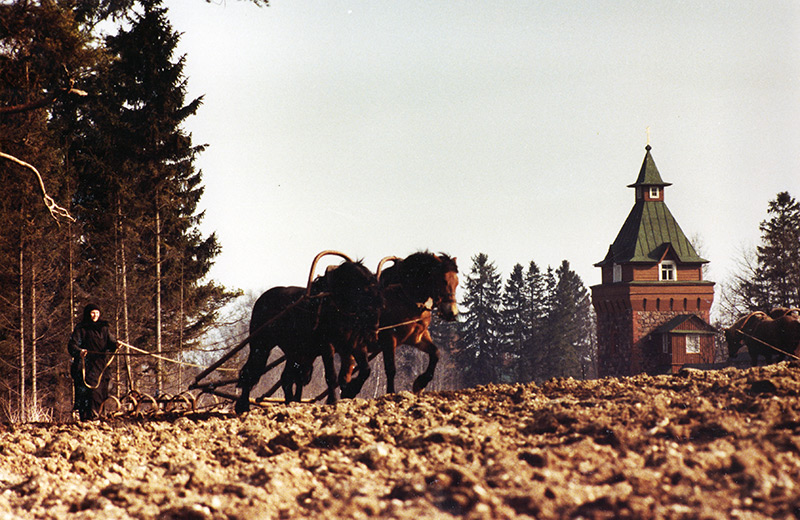
Although life was becoming increasingly difficult in material terms, the spiritual life of the Convent remained unchanged. Indeed, these very hardships increasingly called the sisters to seek their strength not in earthly things, but in God Himself. In this sense, the trials the Convent endured became an opportunity for spiritual growth and maturity, permitted by God. The loss of almost all its land deprived the Convent of much of the material foundation on which its life had long depended. Yet once again, a familiar pattern in Pühtitsa’s history emerged: the Lord allows earthly supports to fall away so that we may learn to rely on Him alone. And so Pühtitsa continued on its path through history, accepting each new circumstance not by choice, but as a new act of obedience, while remaining faithful to what mattered most: prayer, labour, loyalty to the Church, and devotion to the holy shrine.
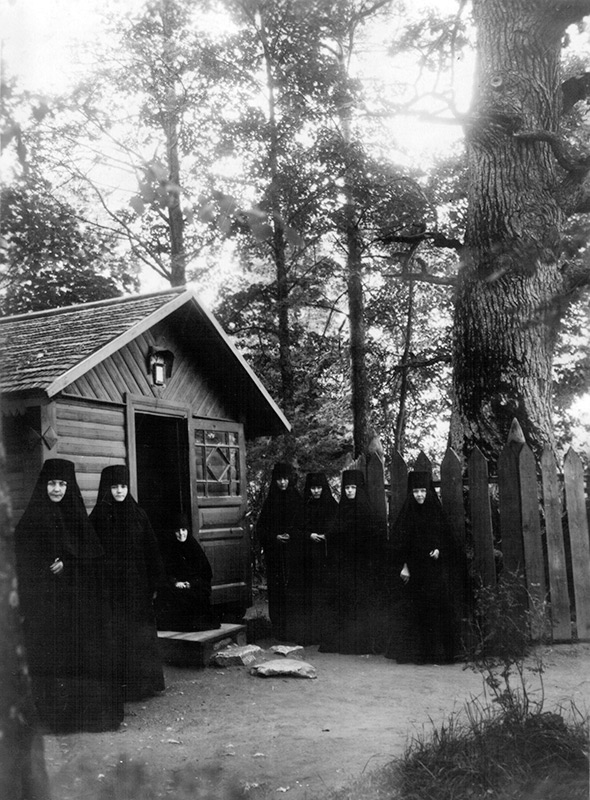
In the 1920s, 1930s and 1940s, Pühtitsa enjoyed a very different situation from monasteries in the Soviet Union, where the authorities were swiftly shutting them down and arresting monks and nuns. Those who escaped arrest were often forced to abandon monastic life. In 1935, the Pühtitsa community regained its status as a monastery. The Estonian government leased the Convent 102 hectares of land — approximately half of its former holdings. Before long, however, even this arable land was taken away.
Within the space of a few decades, the political landscape shifted repeatedly. The Convent’s legal status, its ability to support itself. Yet through all these upheavals, the heart of monastic life remained unchanged: the sisters continued to pray together, to work, to remain faithful to the Church, and to serve others. Their reliance on God and trust in His Providence grew ever stronger. It was this steadfast faith that enabled the Convent to endure. Though the world around the Convent kept changing, its inner life remained intact. Perhaps this reveals once again the truth that has sustained Pühtitsa since its earliest days: the Lord may change the circumstances in which we live, but as long as we remain faithful to Him, the life of the Convent endures.
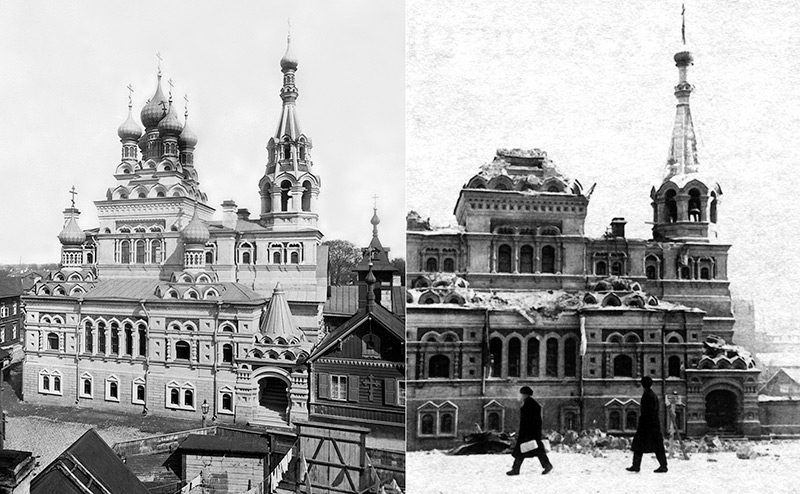
Hunger and cold, backbreaking labour, the devastation left by the war, and compulsory labour on the collective farm — a requirement that remained in force until the 1990s — all became part of the life of the Convent and its sisters. Through it all, they placed their trust in God’s saving Providence and bore their monastic obediences without complaint — a patient endurance that the Holy Fathers liken to martyrdom. Yet another great trial lay ahead. In the late 1960s, the Convent once again faced the threat of closure, amid the anti-religious campaign of the Khrushchev era, well known in the history of the Church. Pühtitsa’s metochion in Tallinn became a direct victim of this persecution: it was closed in 1959, and the Church of the Entry of the Mother of God into the Temple was demolished the following year, in 1960.
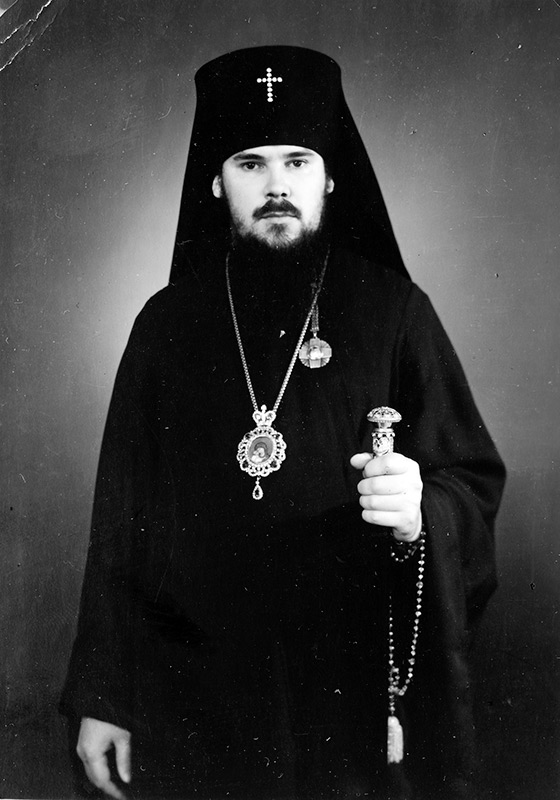
From this point on, Bishop Alexy (Ridiger), who would later become Patriarch Alexy II of Moscow and All Russia, played a decisive role in the Convent’s history. Thanks to his efforts, what had seemed almost impossible became reality: Pühtitsa was among the very few Orthodox monasteries in the former Soviet Union that remained open throughout the Soviet era. The Convent survived even when its closure seemed inevitable. The decision had already been made, the orders issued, and a date set - 1 October 1961. It was the wise and vigorous intervention of Bishop Alexy (Ridiger) and Metropolitan Nikodim (Rotov) that ultimately prevented the plan from being carried out.
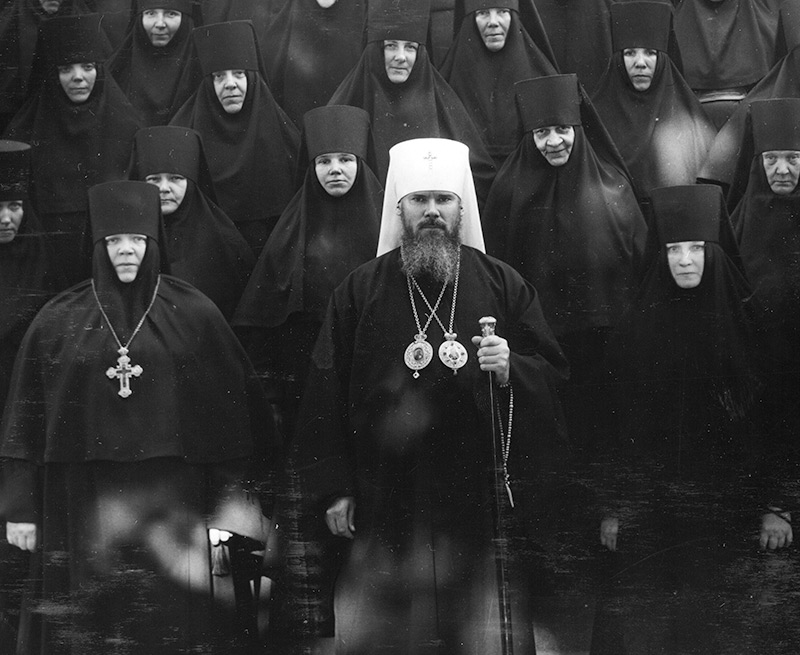
His Holiness Patriarch Alexy II’s life was closely bound up with Estonia and, above all, with Pühtitsa Convent. He loved the Convent deeply and regarded it as the cradle of his spiritual life, a place that had been dear to him since childhood. According to the published history of the Convent, by the age of six he was already serving at the altar of the сathedral of the Dormition, dressed in a sticharion (ed. note: the liturgical vestment worn by altar servers). It was a place he called home, among people he regarded as his own, and within a monastic tradition he knew and understood intimately.
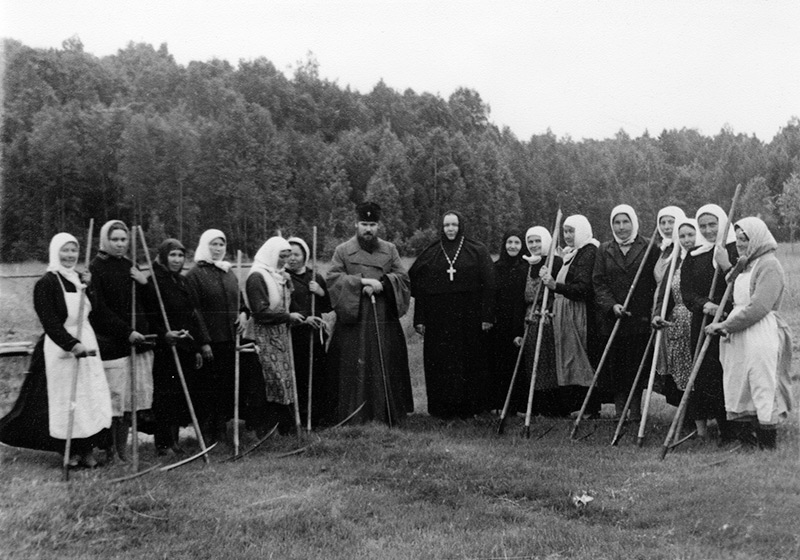
After becoming a bishop, he took Pühtitsa under his special pastoral care, devoting himself to its renewal, growth and flourishing. Working closely with schema-abbess Mother Varvara (Trofimova), he helped bring about a remarkable transformation of the Convent, both outwardly and inwardly. Mother Varvara, rightly known as the Convent’s great builder, laboured tirelessly for its renewal under the wise guidance and with the blessing of His Holiness Patriarch Alexy II.
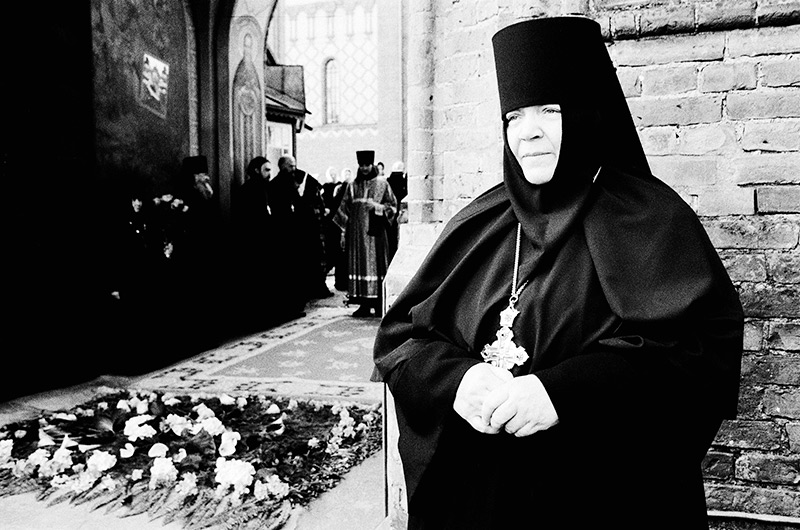
During Mother Varvara’s 43 years as abbess, the Convent underwent a remarkable transformation. To give some sense of the scale of this work, it is worth mentioning just a few of the many changes that took place. Kerosene lamps were replaced by electric lighting, central heating was installed, a sewer system was installed, and a new borehole gave the Convent its own water supply. The main church was extensively renovated and decorated with frescoes for the first time. Most importantly, heating was installed, allowing the sisters to hold services there throughout the year. New buildings were constructed, including accommodation for the sisters, guesthouses and facilities for the Convent’s daily needs. A care home for elderly sisters, with its own chapel, was also established. The monastery’s architectural ensemble was enhanced by the restoration of the St Sergius Bell Tower, which had been destroyed during the Second World War. Pilgrims’ bathing house was built beside the Holy Healing Spring; and a chapel dedicated to St George the Victorious was erected on the monastery’s farm. The vaulted ceilings of the Holy Gates were adorned with paintings depicting the history of the Сonvent. Finally, the wall enclosing the monastery was completed, bringing to fruition a project that had begun in the Convent’s earliest years and fulfilling the vision of Pühtitsa’s principal architect Michael Preobrazhensky. It would be impossible to list everything that was achieved.
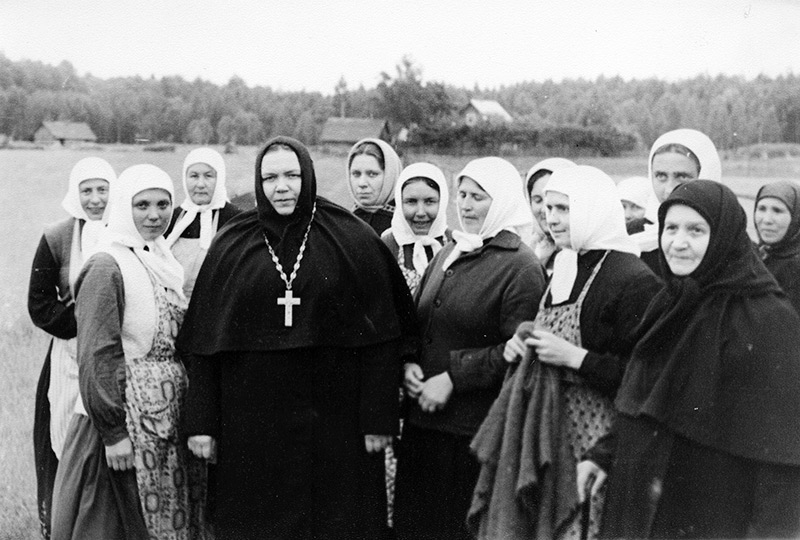
These improvements were about more than buildings and facilities; they helped the Convent meet the changing needs of its community. Pühtitsa remained a centre of pilgrimage, welcoming ever greater numbers of visitors, while the sisterhood itself continued to grow. New accommodation was needed for incoming sisters, along with facilities for their daily life and work, as well as living space to receive pilgrims. The improvements to the Convent’s buildings and grounds were therefore never simply a matter of construction for its own sake. They were an expression of care for the monastic family itself, and, above all, of an abiding love for this holy place — the House of the Mother of God.
Foolish in Christ saint Ekaterina, the blessed elder and nun of our Convent, had foretold that His Holiness Alexy II would become Patriarch. His enthronement as Patriarch took place on 10 June 1990, and later that same month, on 26 June, His Holiness granted Pühtitsa Convent stavropegial status, placing it directly under the authority of the Patriarch.
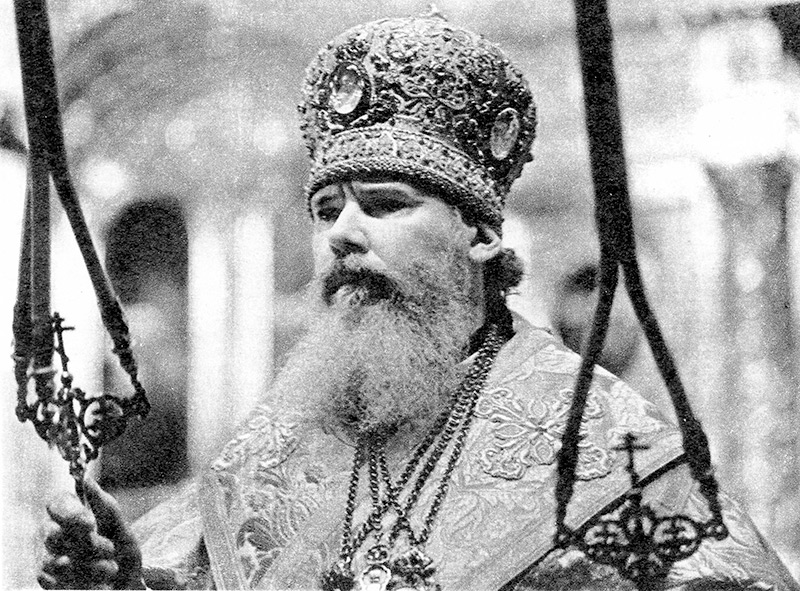
Saint Ekaterina, a blessed fool-for-Christ and monastic elder of our Convent, foretold that Alexy II would become Patriarch. On 10 June 1990, he was enthroned as Patriarch of Moscow and All Russia. Shortly after, on 26 June, he granted Pühtitsa Convent stavropegial status, placing it directly under the authority of the Patriarch.
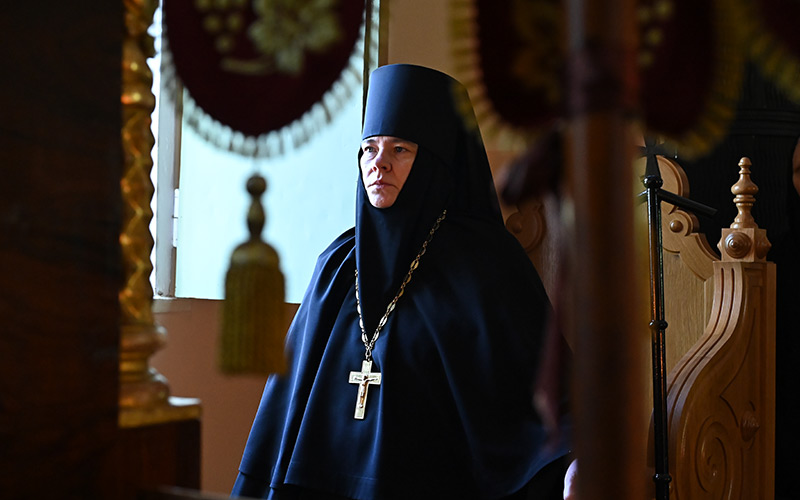
Everything that happens here is rooted in the holy shrine and in the lives of those who come to it, seeking spiritual nourishment and drawing strength from its grace. The life of Pühtitsa is also a living Tradition, handed down through the generations and preserved unbroken by the Providence of God. The sisters, who carry this Tradition forward, are an inseparable part of its continuity.
All these elements are bound together. Each forms part of a greater whole, woven into the fabric of Pühtitsa’s history. The place itself, its holy shrine and the people who live and pray here cannot be separated from one another. Together, they form a single, unbroken story — one in which the past lives on in the present, and the living Tradition continues to shape the future.